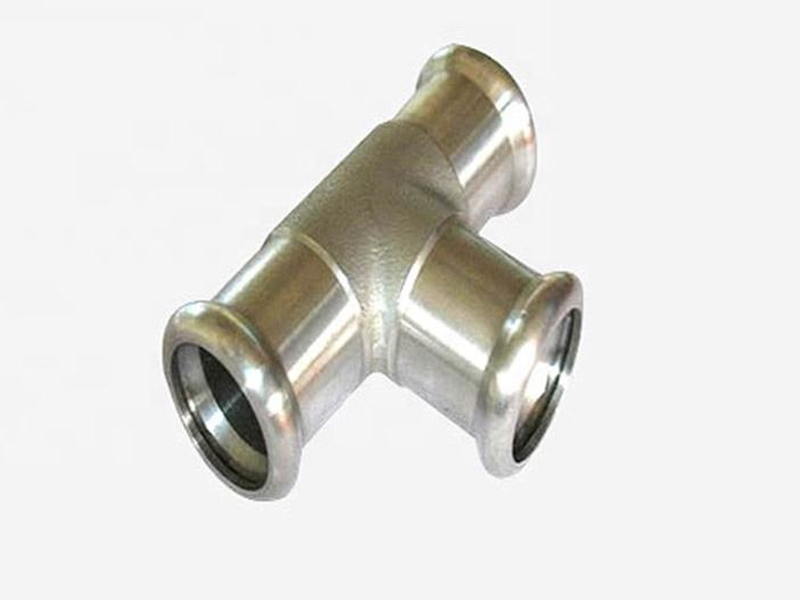
Key Manufacturing Processes
Investment Casting (Lost-Wax Casting)
Steps: Wax model creation → Shell molding (ceramic/silica sol coating) → Dewaxing → High-temperature baking → Stainless steel pouring → Cooling & finishing.
Stainless Steel Internal Thread Tee Joint: Technical Overview and Applications
1. Definition and Core Function
A stainless steel internal thread tee joint (also known as female tee or internal threaded tee) is a pipe fitting designed to branch fluid flow in three directions while connecting pipes or components via internal threads. It is widely used in piping systems to:
- Split a single pipeline into two or more branches.
- Combine flows from multiple pipelines into one.
- Facilitate maintenance or modifications without cutting pipes.
2. Material Selection
Stainless steel internal thread tee joints are typically manufactured from:
- 304 Stainless Steel (CF8):
- General-purpose use with excellent corrosion resistance in mild environments (e.g., water, steam, air).
- Cost-effective and suitable for most industrial and residential applications.
- 316 Stainless Steel (CF8M):
- Contains molybdenum, providing superior resistance to chlorides, acids, and harsh chemicals.
- Ideal for coastal areas, chemical processing, and marine applications.
- Duplex Stainless Steel (e.g., 2205):
- High strength and stress-corrosion cracking resistance for extreme conditions (e.g., seawater desalination, offshore platforms).
3. Key Technical Specifications
- Thread Standards:
- ANSI B1.20.1 (NPT): Common in North America for tapered threads that seal via metal-to-metal contact.
- BS21 (BSPT): Used in Europe/Asia for similar tapered sealing.
- DIN2999: European standard for parallel threads requiring gaskets or O-rings.
- Pressure Ratings:
- Up to PN40 (4.0 MPa / 580 psi) for high-pressure systems (depending on size and material).
- Temperature Range:
- -20°C to 300°C (depending on grade and sealing method).
- Size Range:
- 1/8" to 4" (DN3–DN100), with custom sizes available for large-diameter pipelines.
4. Structural Design and Features
- Three-Way Branching:
- Features one inlet and two outlets (or vice versa) for flexible flow control.
- Internal Threading:
- Precision-machined female threads ensure compatibility with male threaded pipes or fittings.
- Corrosion Resistance:
- Stainless steel’s chromium oxide layer protects against oxidation and chemical attack, even in welded zones (if applicable).
- Hygienic Design (Optional):
- Sanitary-grade tees feature polished surfaces (Ra ≤ 0.8 μm) and FDA-compliant seals for food/pharma industries.
5. Applications
- Industrial Piping:
- Connecting pipes in chemical, petrochemical, and power plants.
- Water Supply Systems:
- Distributing water in residential, commercial, and municipal networks.
- HVAC Systems:
- Branching chilled water or steam lines for climate control.
- Food & Beverage:
- Integrating process lines in dairies, breweries, and bottling plants.
- Pharmaceuticals:
- Maintaining sterile conditions in bioreactors and fermentation tanks.
- Marine & Offshore:
- Preventing saltwater corrosion in shipboard piping systems.
6. Installation Guidelines
- Thread Preparation:
- Clean threads with a wire brush to remove debris or old sealant.
- Sealing:
- Apply Teflon tape or thread sealant to ensure a leak-proof connection.
- For high-pressure applications, use metal-to-metal sealing with tapered threads (NPT/BSPT).
- Tightening:
- Use a wrench to tighten the joint securely (avoid over-torquing to prevent thread damage).
- Inspection:
- Conduct a pressure test to verify integrity before commissioning.
7. Comparison with Alternative Tee Types
8. Industry Standards and Certifications
- ASTM A351: Standard for cast stainless steel fittings (including tees).
- ASME B16.11: Covers threaded and socket-weld fittings (including tees).
- EN 10241: European standard for steel threaded fittings.
- 3-A Sanitary Standards: For hygienic tees used in food/pharma industries.
9. Market Trends
- Smart Tees: Integration of IoT sensors for real-time flow monitoring.
- Eco-Friendly Designs: Use of recycled stainless steel and low-emission manufacturing processes.
- Hybrid Solutions: Combining threaded and welded features for flexibility in maintenance.
Advantages of Stainless Steel Precision Casting Pipe Fittings
1. High Precision and Complex Geometries
Precision casting (investment casting) allows the creation of highly intricate components—such as hollow structures, multi-way valves, and thin-walled fittings—with tight tolerances up to ±0.05mm. This eliminates the need for extensive machining and supports fully custom designs tailored to specialized industries including medical devices and aerospace.
2. Superior Corrosion Resistance
Stainless steel fittings made from grades such as 304, 316, and 316L offer exceptional resistance to corrosion, oxidation, and chemical exposure. These properties make them suitable for demanding environments including marine, chemical processing, and food-grade applications. The use of the silica sol casting process further improves surface integrity, minimizing risks of pitting and crevice corrosion.
3. Material Efficiency and Cost-Effectiveness
With near-net-shape production, precision casting achieves material utilization rates exceeding 90%, significantly reducing waste. This makes it a cost-efficient solution, especially for small to medium batch production. The process also minimizes secondary operations such as drilling or welding, shortening lead times and streamlining manufacturing.
4. Durability and High-Temperature Performance
Stainless steel precision castings retain high mechanical strength under extreme temperatures—up to 1,200°C for specific grades—making them ideal for high-heat applications like automotive exhaust systems and industrial machinery. They also offer excellent resistance to wear, impact, and fatigue, ensuring reliable performance in harsh operating conditions.
5. Smooth Surface Finish and Aesthetic Quality
Precision casting delivers components with consistently smooth surfaces and high aesthetic appeal, reducing the need for post-processing. The superior finish not only enhances visual quality but also supports hygienic and cleanability requirements in applications such as food, pharmaceutical, and architectural fittings.
Applications of Stainless Steel Precision Casting Pipe Fittings
Stainless steel precision casting pipe fittings are critical components in industries requiring corrosion resistance, high precision, and complex geometries. Their versatility stems from advanced manufacturing processes like investment casting (lost-wax casting) and silica sol casting, enabling seamless integration into diverse systems. Below are their primary applications:
1. Plumbing & Sanitary Systems
Shower Enclosures: Precision-cast glass clamps, hinges, and U-channels for frameless shower doors (e.g., 304 stainless steel E-shaped clamps with 50kg load capacity).
Drainage & Piping: Elbows, tees, and reducers for corrosion-resistant wastewater systems in residential and commercial buildings.
Water Supply: Fittings for potable water lines (compliant with NSF/ANSI 61 standards for safe drinking water contact).
Precision casting enables leak-proof joints and smooth internal surfaces, which help prevent bacterial growth. It also supports custom designs to meet aesthetic and functional requirements, such as concealed fixtures.
2. Industrial Machinery & Equipment
Pump & Valve Components: Impellers, housings, and connectors for chemical, oil & gas, and marine applications (e.g., 316L stainless steel pump bodies resistant to seawater corrosion).
Automotive Systems: Exhaust flanges, turbocharger manifolds, and fuel rail fittings (withstanding high temperatures and vibrations).
Instrumentation: Precision connectors for pressure gauges, flow meters, and sensors (e.g., miniature 304 stainless steel tees with ±0.05mm tolerance).
Produces lightweight yet durable parts with thin walls (as low as 2mm) for efficiency.
Ensures dimensional stability under extreme operating conditions.
3. Medical & Pharmaceutical Equipment
Surgical Instruments: Handles, connectors, and joints for laparoscopic tools (e.g., 316L stainless steel fittings with mirror-polished surfaces for easy sterilization).
Fluid Management Systems: Valves, filters, and couplings for sterile liquid transfer in biotech and pharmaceutical plants.
Diagnostic Devices: Fittings for MRI machines, X-ray equipment, and lab analyzers (non-magnetic 304/316L grades to avoid interference).
Meets stringent hygiene standards (ISO 13485, FDA compliance).
Eliminates welding lines that could harbor contaminants, ensuring biocompatibility.
4. Architectural & Decorative Applications
Staircase Handrails: Adjustable elbows, brackets, and end caps for modern stair designs (e.g., 50mm-diameter 304 stainless steel elbows with 90° rotation).
Curtain Wall Systems: Spiders, claws, and connectors for glass facades in high-rise buildings.
Furniture & Lighting: Decorative tubes, joints, and bases for luxury interior fittings (e.g., brushed finish 304 stainless steel lamp holders).
Achieves intricate designs (e.g., logo embossing, curved profiles) without machining.
Provides consistent surface quality for aesthetic appeal (e.g., 600-grit polishing).
5. Food & Beverage Processing
Dairy & Brewery Equipment: Fittings for milk tanks, beer kegs, and pasteurization systems (e.g., 316L stainless steel sanitary clamps with Tri-Clamp connections).
CIP (Clean-in-Place) Systems: Spray balls, nozzles, and distributors for automated cleaning of processing lines.
Resists acidic/alkaline cleaning agents without degradation.
Ensures smooth internal contours to prevent product residue buildup.
6. Marine & Offshore Engineering
Shipbuilding: Pipe fittings for ballast water systems, fuel lines, and cooling circuits (e.g., duplex stainless steel 2205 tees for saltwater resistance).
Offshore Platforms: Subsea connectors, chokes, and manifolds for oil extraction (withstanding pressures up to 10,000 PSI).
Combines high strength with corrosion resistance in harsh marine environments.
Reduces weight compared to forged parts, improving fuel efficiency.
Advantages
- Enables production of intricate shapes (e.g., hollow structures, multi-way valves).
- Delivers high dimensional accuracy (tolerance ±0.1mm) and smooth surface finish (Ra ≤ 3.2μm).
- Supports diverse stainless steel grades: 304, 316, 316L, etc., for varying corrosion and temperature resistance.
This process is widely applied in Stainless Steel Lost Wax Casting Pipe Fittings, ensuring durability and precision for complex designs.
Silica Sol Casting
A refined variant of investment casting using silica sol as a binder, offering superior surface quality and fewer defects (e.g., porosity, sand inclusions).
Ideal for high-end applications like medical devices and food-grade machinery (compliant with ISO 13485, FDA standards). Many Stainless Steel Cast Pipe Fittings are produced using this method to guarantee a smooth finish and enhanced reliability.
Key attributes
|
Technic
|
Casting
|
shape
|
Equal
|
|
head code
|
round
|
Surface Treatment
|
Smooth
|
|
customized support
|
OEM, ODM, OBM
|
place of origin
|
Hebei, China
|
|
brand name
|
Jarzoo
|
model number
|
custom
|
|
Connectivity
|
Flange
|
Material
|
stainless steel 304 316 316L
|
|
Technology
|
investment casting in one
|
working environment
|
oxidation and corrosion resistance
|
|
high temperature quality
|
high temperature resistance
|
quality
|
durable&100% inspection
|
|
Size
|
Customized Size
|
MOQ
|
1pc
|
|
OEM
|
Provide OEM Services
|
Seal
|
100% leakage test
|
|
Sample
|
Available
|
|
|
About Jarzoo
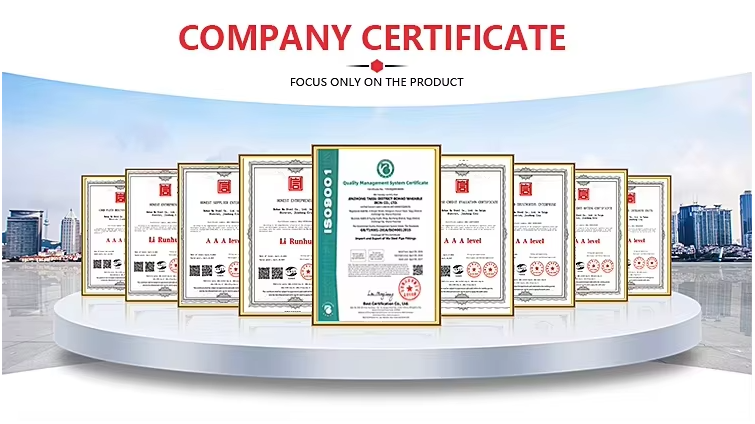
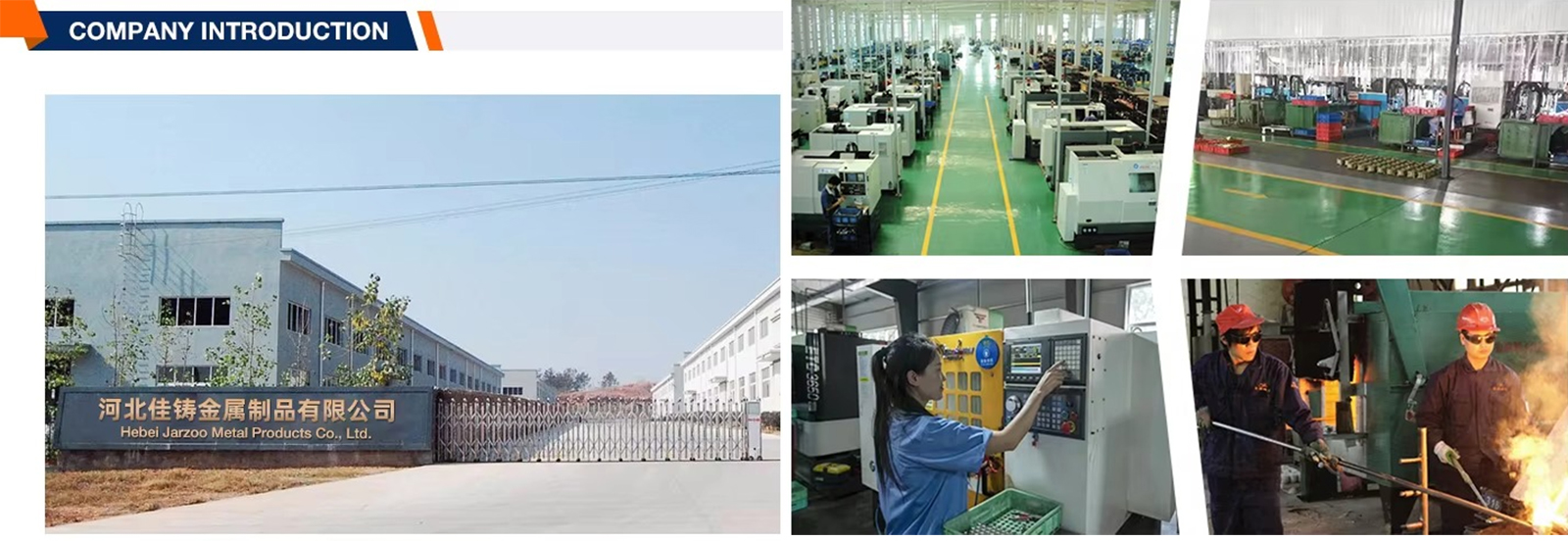
Hebei Jarzoo Metal Products Co., Ltd. specializes in custom precision castings using advanced investment casting (silica sol/lost wax). With decades of experience since the 1990s and a complete production line including mold design, casting, machining, and surface treatment, we serve industries ranging from brewing and food processing to automotive and aerospace.
We support full OEM/ODM capabilities, fast sampling, and reliable international logistics from our well-located base near Beijing and Tianjin ports.
Technical Specifications
|
Specification
|
Customizable according to customers' drawings or samples
|
 |
|
Material
|
stainless steel;304 CF8 1.4308 304L CF3 316 CF8M 1.4408 316L CF3M 1.4404 1.4409
|
|
WCB 1.0619 25# 35# 45# Carbon Steel; Alloy Steel; Copper alloy etc.
|
|
We test the chemical composition of every furnace before pouring by spectrometer to accord with the international standards
|
|
Technology
|
Silicon sol precision casting/investment casting/lost wax casting
|
|
Machining
|
CNC machining center, CNC lathe
|
|
Casting tolerance
|
IT4 - IT7
|
|
Machining tolerance
|
+/- 0.005mm,ISO2768-f
|
|
Standard
|
DIN,JIS,ASTM,GOST,ISO,BS
|
|
Weight range
|
0.01-150kg
|
|
Specification of casting furnace
|
200T
|
|
Finish
|
Acid passivation
|
|
Heat treatment
|
Available
|
|
Surface treatment
|
Electrochemical polish.mirror polish. As customers’ requirements
|
|
Application
|
Automobile, agriculture, machinery, furniture,
|
|
construction, home appliances, electronics.piping.aircraft parts,hardware,OEM&ODM capability.etc.
|
Why Choose Us?
This combination of precision, durability, and versatility makes stainless steel precision casting pipe fittings indispensable in modern engineering and design. For customized solutions, partnering with Jarzoo ensures cost-effective, high-quality outcomes.
Packaging & Shipping
Products are carefully protected with spark-proof film or kraft paper, then boxed or palletized. Reinforced corners and custom packaging help withstand long-distance sea or truck transport, ensuring safe arrival at customer destinations.
|
Packaging Details
|
Carton/Palette/Customized
|
|
Individual Packaging Size
|
Example: 8X10X15 cm (subject to change)
|
|
Single Item Gross Weight
|
Example: 0.50 KG (subject to change)
|
|
Delivery Time
|
7-30 days after payment
|
|
Shipping Method
|
Sea/Air/Courier
|
Customization options
|
Customization Option
|
Minimum Order Quantity
|
|
Customized logo
|
100 pieces
|
|
Customized packaging
|
100 pieces
|
|
Graphic customization
|
100 pieces
|
|
Products customization
|
100 pieces
|

Frequently Asked Questions
Q1: What is your typical delivery time?
Sample orders are typically delivered within 25 working days. Mass production orders are generally completed within 60 working days.
Q2: What are your accepted payment terms?
For orders under $1000 USD, full payment is required in advance. For orders of $1000 USD or more, a 30% deposit via T/T is required upfront, with the remaining balance due before shipment.
Q3: What information do you need from clients to begin production?
We can customize products based on your provided drawings and samples.
Q4: Do you retain traceability records?
Yes, tested samples are securely stored in our laboratory for a minimum of two years to ensure full traceability.


